TraumAddiction: Treating Addicted Survivors of Trauma

Last updated 2/2021
MP4 | Video: h264, 1920x1080 | Audio: AAC, 44.1 KHz, 2 Ch
Language: English | Duration: 5h 48m | Size: 13.26 GB
SAFETY AND STABILIZATION FOR THE ADDICTED SURVIVOR OF TRAUMA
What you'll learn
Summarize the causes of substance use disorders & factors that reinforce drug use as related to case conceptualization.
Explain the basic neurobiology of addictive chemicals and its treatment implications.
Conceptualize Treatment that addresses both Traumatic Stress and Addiction concurrently
Discover the “active ingredients” for trauma treatment that work equally well with addictive disorders
Develop skills for assessing traumatic stress & Addiction disorders
Competently implement feedback informed therapy with traumaddicted clients following training to develop, maintain & enhance therapeutic relationship and positive outcomes
Discover technical and relational interventions for enhancing positive expectancy during treatment
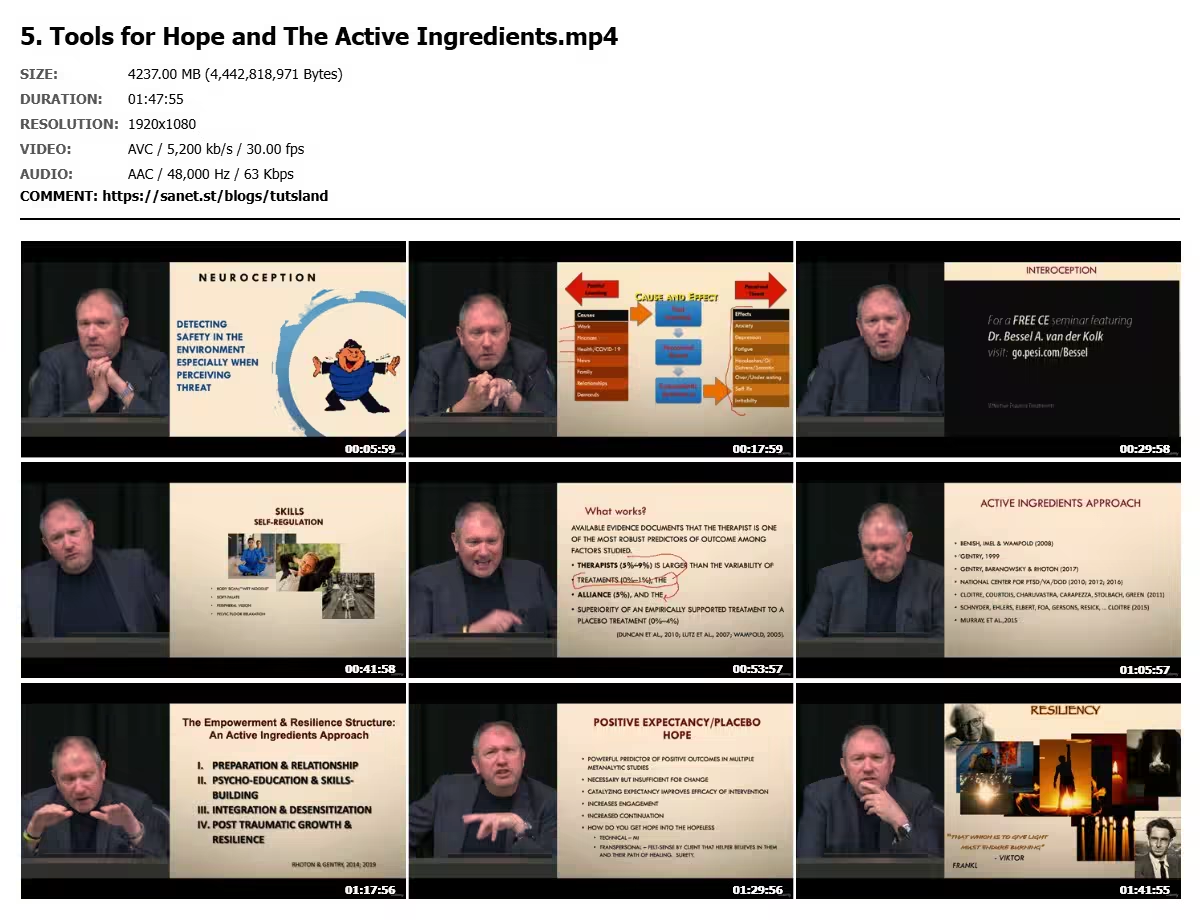
Conceptualize importance of teaching clients about ANS functions especially threat response (tools for hope)
Identify the key components to interrupting threat response in real-time activities (self-regulation)
Develop skills for ameliorating shame towards self-compassion using graphic time line intervention
Skills development for relaxation, grounding & containment to assist with safety & stabilization
Employ principles of reciprocal inhibition to engage in vivo exposure to lessen PTS(D) and addiction sx
Discover principles of posttraumatic growth and resilience for both early-stage skills-building later-stage optimization
Requirements
No Prerequisites
Description
Not everyone who is traumatized becomes addicted but everyone who is addicted has been traumatized – Gabor Maté
This course first explores the intersection of trauma and addiction through a bio-psycho-social approach that, for the 21st Century would be more accurately called neuro-traumatic-polyvagal approach. This course helps clinicians, addiction professionals and recovering addicts understand how trauma is at the center of the disease of addiction and must be addressed for addicts to enjoy lasting recovery and quality of life. The second half of the course introduces a four-stage treatment structure to treat trauma and addiction simultaneously ins a safe and effective method using evidence-based principles and practices.
COURSE OUTLINE
Foundational Issues in Addictions-Informed Psychotherapy
• Addiction Vs. Substance Use Disorder vs. Chemical Dependence
• Neurobiology of Addiction
• Causes of Addiction (BioPsychosocial)
• Attachment issues
TRAUMATIC STRESS
• What Causes Trauma?
• Symptoms of PTS(D)
EMPOWERMENT & RESILIENCE TREATMENT STRUCTURE: Four-Stage Behavioral Treatment Model for Co-Occurring Traumatic Stress and Addiction
• Preparation & Relationship
• Skills Development & Cognitive Restructuring
• Desensitization & Integration
• Posttraumatic Growth & Resilience
1. Preparation & Relationship
• Assessment
• Feedback Informed Tx
2. Skills Development & Cognitive Restructuring
• Tools for Hope/ANS
• Self-Regulation
• Graphic Time-Line/Narrative
• Shame > Self-Compassion
• Additional Stabilization & Containment
3. Desensitization & Integration
• In vivo Exposure
• Forward-Facing® Trauma Therapy
• Imaginal Exposure (1+ year of recovery)
4. Posttraumatic Growth & Resilience
• Elements of PTG
• Continuance of IVE/FFTT/Capacity-Building
• Reconnection
• Optimization
Who this course is for
Clinicians
Addiction Professionals
Mental Health Professionals
Recovering Addicts
Quick check before we show the links
Helps us keep automated scrapers from hammering the filehosts.