Why Music Works
This post was published 6 years ago. Download links are most likely obsolete. If that's the case, try asking the uploader to re-upload.
Video: .mp4 (1280x720, 30 fps(r)) | Audio: aac, 44.1 KHz, 2 Ch
Genre: eLearning Video | Language: English + .srt | Duration: 3.5 hour | Size: 3.86 GB
The Origins Of, and Reasons Behind, Music Harmony
What you'll learn
The origins of, and the reasons behind, music harmony.
How sound works.
Where music harmony comes from.
Why we have chords.
Why we have keys.
Why we have major and minor keys.
Why we have scales.
Why we have major and minor scales.
Why there is more than one type of minor scale.
Why there are only 7 notes in a scale.
Why there are only 12 different notes in total.
Why some chords go together better than others.
Why rhythm works.
A bit about monkeys.
Requirements
No real previous musical experience is necessary but it would be helpful if you had an elementary knowledge of music notation. (But don't worry, it doesn't matter if you don't because I provide a set of slides on music notation at the beginning anyway).
Description
A series of videos delving into the reasons behind Western music harmony - why we have keys, why are there major and minor keys, why there are only twelve of each, why we have scales, why do we have seven notes in the major or minor scale, why is there more than one type of minor scale, why do some notes go better together than others, why do some chords go better together than others, why rhythm works . . .. and much more.
Who this course is for:
This course is suitable for beginners, intermediate and experienced musicians alike.
Screenshots
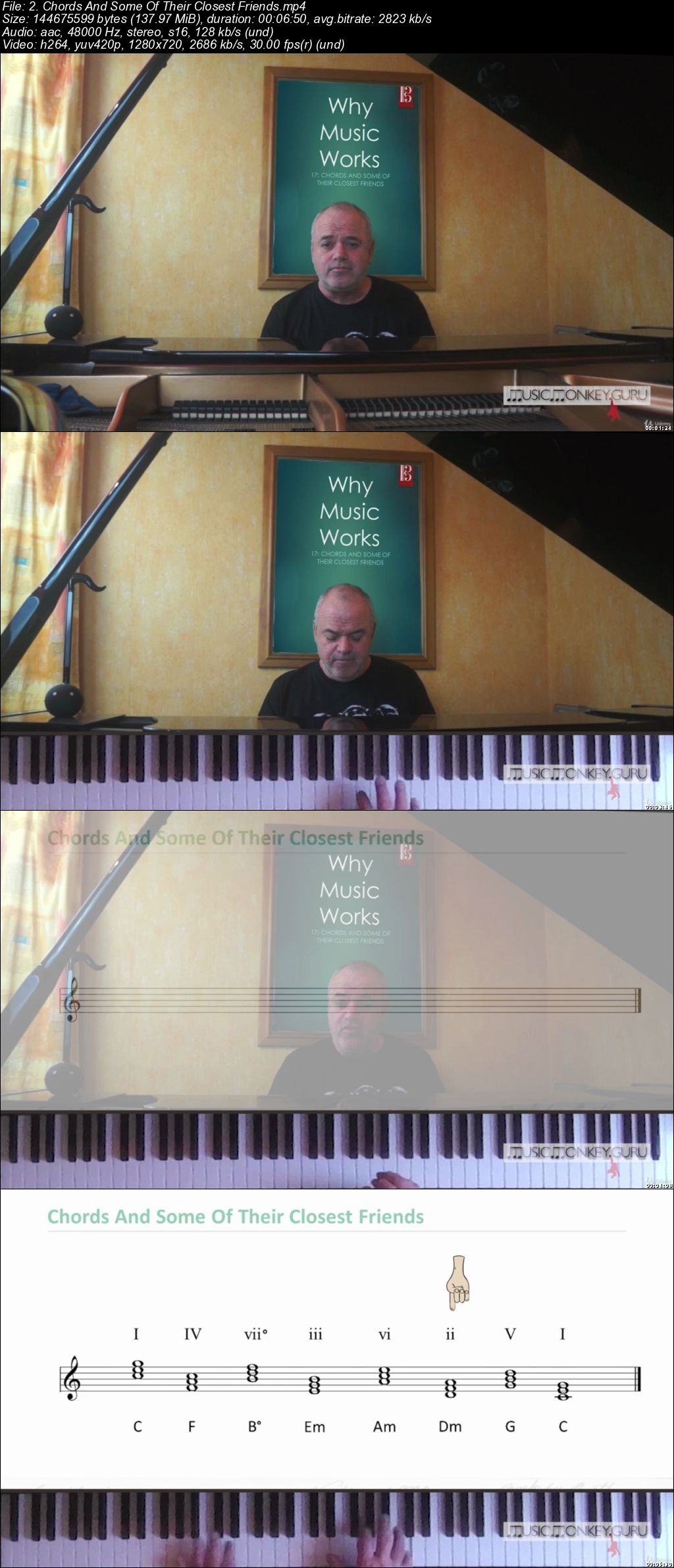
Click Here & Visit My Blog For More Udemy Tutorial. if You Need Update Or Links Dead Don't Wait Just Leave Comment
Quick check before we show the links
Helps us keep automated scrapers from hammering the filehosts.