Julian Reynolds & Johannes Leertouwer - Brahms: The Complete Sonatas for Piano and Violin (2023)
This post was published 2 years ago. Download links are most likely obsolete. If that's the case, try asking the uploader to re-upload.
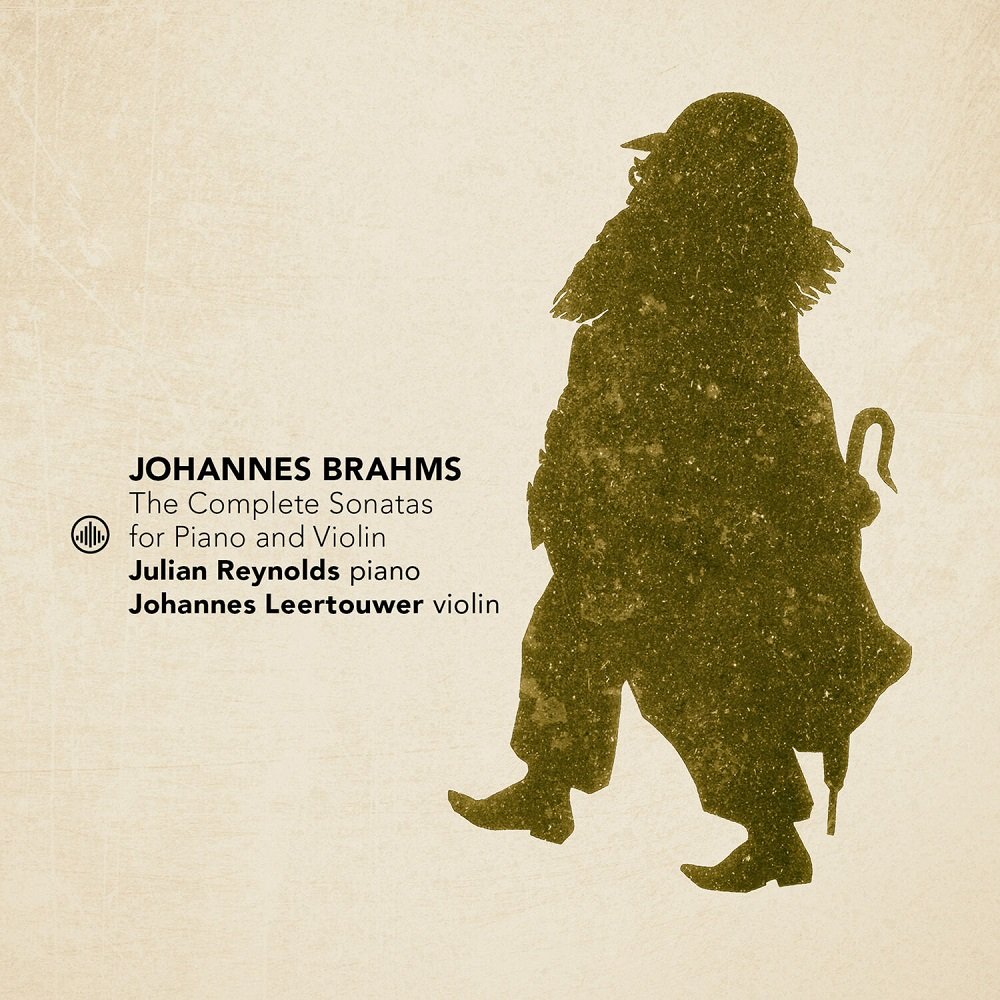
Album Preview
FLAC (tracks) 24-bit/96 kHz - 633 Mb | WEB FLAC (tracks) - 278 Mb | MP3 CBR 320 kbps - 163 Mb | 01:11:00
Classical | Label: Challenge Classics
A brand new recordings of Brahms' Sonatas for Piano and Violin presented according to period performance practice.
"We made this recording in January 2023, one week before I defended my dissertation on historically informed performance practice of Brahms's orchestral music at Leiden University and received my doctorate. The research had offered me the opportunity to re-investigate my ideas about contemporary performance style, particularly of 18th- and 19th-century repertoire. Over the course of the 4-year project, I had rehearsed, performed, and recorded the Brahms symphonies and concertos as a conductor. After so much reading, writing, and conducting, I found that I longed for the experience of applying what I had discovered as a violinist to find how it had changed my approach to Brahms's chamber music. I called Julian Reynolds and asked if he would be willing to experiment with my findings. We had studied the Brahms violin sonatas together with Josef Suk in Vienna and Prague many years ago. We found a beautiful Bluthner grand piano of 1857 in the atelier of Andriessen pianos in Haarlem.
Our recording represents our desire to find the freedom to apply the 19th-century expressive tools of flexibility of rhythm and tempo, of expressive legato, portamento and vibrato that have been largely forgotten or perhaps discarded over the course of last century. These tools cannot simply be dusted off and re-implemented. As I argued in my dissertation, working with them requires re-inventing them. Portamento for example was a hotly debated subject throughout the 19th century. There is no single model or example of how to apply it today. The same can be said about vibrato. What we can say with certainty is that in the violin methods of Louis Spohr and later Joseph Joachim and Andreas Moser, portamento was named as the first and most important means of expression for string players, and vibrato was described as an ornament. When it comes to flexibility of tempo, we can be sure that the 19th-century concept of tempo was more flexible, and that modifications of tempo were much more frequent than in more modern times. We know that Brahms had a particularly free and flexible way of performing his own music. Brahms himself famously refused to give metronome markings, writing that he could not find a meaningful relationship between his flesh and blood and such a mechanical instrument, a feeling perhaps inherited from Beethoven. He also wrote that any "sane musician" would take a different tempo every week." - Johannes Leertouwer
Tracklist
01. Violin Sonata No. 1, Op. 78 in G Major: I. Allegro ma non troppo
02. Violin Sonata No. 1, Op. 78 in G Major: II. Adagio
03. Violin Sonata No. 1, Op. 78 in G Major: III. Allegro molto moderato
04. Violin Sonata No. 2, Op. 100 in A Major: I. Allegro amabile
05. Violin Sonata No. 2, Op. 100 in A Major: II. Andante tranquillo - Vivace- Andante- Vivace di più- Andante - Vivace
06. Violin Sonata No. 2, Op. 100 in A Major: III. Allegretto grazioso (quasi andante)
07. Violin Sonata No. 3, Op. 108 in D Minor: I. Allegro
08. Violin Sonata No. 3, Op. 108 in D Minor: II. Adagio
09. Violin Sonata No. 3, Op. 108 in D Minor: III. Un poco presto e con sentimento
10. Violin Sonata No. 3, Op. 108 in D Minor: IV. Presto agitato
Quick check before we show the links
Helps us keep automated scrapers from hammering the filehosts.