Great Pharaohs of Ancient Egypt
This post was published 6 years ago. Download links are most likely obsolete. If that's the case, try asking the uploader to re-upload.
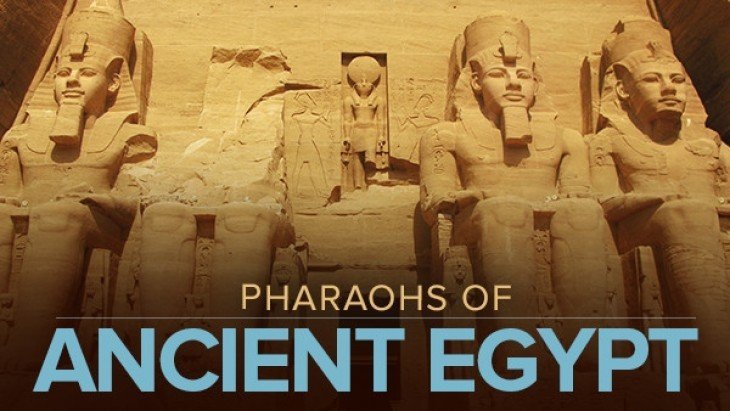
Prof. Bob Brier, Ph.D. | Audio: m4a 92 KHz | Duration: 06:09 H/M | Lec: 30 - Average 30 minutes each | 248 MB | Language: English + Course Guidebook
No great civilization continues to speak to us like that of ancient Egypt. But what is it about this ancient civilization that still captures our imaginations?
Description
No great civilization continues to speak to us like that of ancient Egypt. But what is it about this ancient civilization that still captures our imaginations? What made Egypt special, allowing it to grow, in Professor Bob Brier's words, "from a scattering of villages across the Nile to the greatest power the world had ever seen"?
A Great Teacher and Egyptologist
Professor Brier is an Egyptologist and specialist in mummies who knows the ancient Egyptians—literally—from the inside out. In fact, in 1994, Dr. Brier became the first person in 2,000 years to mummify a human cadaver in the ancient Egyptian style. This research was the subject of a National Geographic television special, Mr. Mummy.
Relaxed, matter-of-fact, and wryly humorous, he weaves into the stories of the great pharaohs the daily realities of Egyptian life. You learn, for example, that the origin of eye makeup was not due to vanity. Instead, makeup was ground on small, personal palettes and worn by every Egyptian for the same reasons modern athletes wear black eyeliner under their eyes: to absorb the sun's glare.
A Palette Launches 3,000 Years of Imagery
It is a quite different palette—that of Narmer, the king who unified Egypt—that marks our real introduction to Egypt's great rulers. Considered the first historical document, the "Narmer Palette" reveals images of traditions Narmer created that would endure for 3,000 years, including the double crown of Egypt and the "smiting pose" in which all pharaohs ever after would be shown.
Just as scholars look to the Narmer Palette as their earliest message from Egypt, it is the pyramids that perhaps serve that role for the rest of us.
The pharaoh Sneferu, seeking a suitable way to house his own burial chamber, taught Egypt how to perfect the pyramid, a structure whose origins lay in the need to protect desert graves from exposure by the wind. Professor Brier makes it clear, however, that pyramids were far from Sneferu's only achievements.
A Female Pharaoh Lost to History
One of Egypt's greatest rulers, the female pharaoh Hatshepsut, raised magnificent obelisks at the Temple of Karnak and built what Professor Brier calls "perhaps the most beautiful temple in all of Egypt," Deir el-Bahri. The inscriptions on the temple's walls are the first known depictions of sub-Saharan Africa; Hatshepsut was so powerful a king she was able to send a trading expedition there.
Ironically, most of the evidence of Hatshepsut's existence was systematically erased after her death; Egyptians simply did not want to acknowledge that a woman had been king.
Professor Brier continues with the tale of one of Egypt's most controversial pharaohs, Akhenaten, who tried to alter the three stabilizing principles of Egyptian society—the religious, military, and artistic traditions of the most conservative nation on earth—and almost destroyed Egypt in the process. Akhenaten's story left a legacy the ancients would attempt to erase. Ironically, this forgotten pharaoah would be the father of the most famous pharaoh in modern times: the boy-king Tutankhamen.
Homepage
**If you want to buy or renew premium account , Please buy from below links and support me**
=> visit DazX blog for Udemy courses: DazX Blog
=> visit Creativelive blog for more creativelive courses: Creativelive
=> visit TGC blog for more Greatcourses: Thegreatcourses
Quick check before we show the links
Helps us keep automated scrapers from hammering the filehosts.