Digitization of Economy and Society by Zhikui Feng
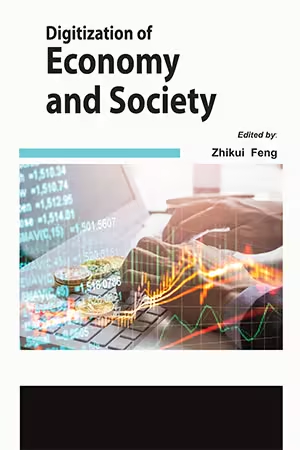
Zhikui Feng | 2023 | ISBN: 1682508129 | English | 354 pages | True PDF | 5 MB
Digital technology has significantly changed the speed of operation in the economy. The Internet and digital devices are a driver of economic growth. Today, organizations of all shapes and sizes are starting to use digital technology to bypass the limitations of the physical world. New advances in this field allow them to release their products to the market faster, to reach the right customers, while offering a near perfect user experience. Organizations are continuously adapting to manage the ongoing stream of data, implementing strategic business plans to ensure that the organization remains on top of current trends. Digital technologies have a huge impact on society. Digitization is affecting every industry on areas like financial policy, employment and competition. Digitization is not a new phenomenon. For many years, this concept has encompassed technological developments in general, especially in information technology. The impact of digital economy is being felt in many areas. For instance, some of the services and products that were previously analogue, such as travel arrangements, music, film, translations and media are becoming digital.
This book highlights the changes and issues resulting from the digitization of society, which has fundamentally transformed organizations. The book highlights the opportunities and risks of digitalization and digital transformation for our global economy at both the micro and macro level. Policymakers today face a different environment for Information and Communication Technology (ICT) than the one for which they designed policies. ICT technologies are far more persuasive than they were previously. More people today have access to mobile phones than to electricity, powering exponential growth in global data generation. With ICT access approaching ubiquity, policymakers' next challenge is to ensure that individuals, businesses and governments are making the best possible use of networks and applications. Countries that have achieved levels of digitization-the mass adoption of connected digital technologies and applications by consumers, enterprises, and governments-have realized significant benefits in their economies, their societies and the functioning of their public sectors. Policymakers have an important role to play in ensuring that their countries are progressing toward advanced stages of digitization. They need to acknowledge where they currently stand and recognize the benefits of digitization. This book investigates the impact of information and communication technologies (ICTs) on development and well-being and highlights some emerging issues relating to the realities, constraints and digital divides. This book will be an invaluable source of reference for students, academics and practitioners with an interest in the economics of digitization and the digital economy.
Quick check before we show the links
Helps us keep automated scrapers from hammering the filehosts.