3GE Collection on Food Science: Starch in Food
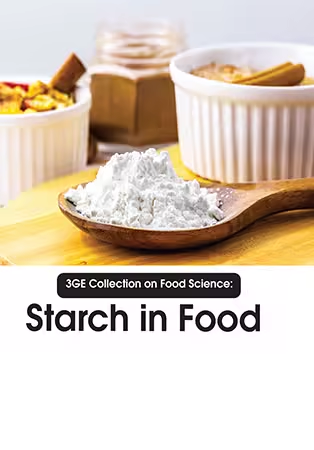
2023 | ISBN: 1984681095 | English | 286 pages | True PDF | 19 MB
Throughout the world, starch is a major food product and biomaterial. It is produced primarily from cereals, such as rice, wheat, and corn, and root vegetables, such as potatoes, sweet potatoes, and cassava. Although traditionally used in the food industry, technology has led to its steady relevance in many other sectors as well, including health and medicine, textiles, paper, fine chemicals, petroleum engineering, agriculture, and construction. As a food product or additive, it thickens, preserves, and enhances quality in baked foods, confectioneries, pasta, soups and sauces, and mayonnaises. Two types of polysaccharides, amylose and amylopectin, make up starch, a glucose polysaccharide. Depending on the plant species, starch molecules differ in structure and composition, and the protein and fat content of the storage organs may vary significantly as well. As a result of its inherent functional diversity resulting from its variety of biological sources, starch has a wide range of industrial applications.
This E-Collection on Starch in Food highlights the sources of starch, its applications, and its interactions with other ingredients. It is also discussed how processing and storage affect cooked starch foods. The purpose of starch in foods is to thicken, gel, add stability, and replace or extend more expensive ingredients. In order to make the best use of starch in these functions, one must understand the mechanism underlying each effect. Starches are preferred for availability, low cost, and unique properties. During freezing and pasting, starch undergoes changes that affect the structure of foods, which is helpful for gaining this understanding.
In spite of its apparent simplicity, starch is a complex carbohydrate; its branched structure and extremely large size make it a complex carbohydrate. In spite of its simplicity, starch research still faces many unanswered questions. Despite advances in correlating the fine structural characteristics of amylopectin and amylose to functionality, such as texture or digestibility, no consensus has been reached regarding the internal architecture of amylopectin. The future holds challenges in further resolving structure-function relationships of starch and understanding and implementing ways to improve the healthiness of starchy foods.
A key component of starch versatility in industrial applications is its physicochemical properties and functionality. In its native form, starch is limited in its application and functionality. However, advances in biotechnology and chemical technology have enabled starch to be modified in a wide variety of ways for different purposes. In this collection, we examine the different chemical reactions of starch and examine the applications of these products to food.
Quick check before we show the links
Helps us keep automated scrapers from hammering the filehosts.